Hive of the Dead
Ian Livingstone and Steve Jackson1 have a lot to answer for. Their Fighting Fantasy game books are a prime cause for me becoming the sort of geek I am today, and a significant portion of my childhood was spent flipping rapidly from page to page, as directed by the text. To this day, the phrase “Turn to Page 400” is nerd-code for victory.2
Jackson and Livingstone also founded UK games company, Games Workshop. So it may come as a surprise to some of you that there hasn’t been an adventure game book set in any of the worlds of Warhammer. That is, until recently; Hive of the Dead is set in the grim darkness of Warhammer 40,000 and puts you in the shoes of an Imperial Guardsman who has lost his memory and who happens to be trapped in a zombie-infested command centre. From the get-go, the story is tense and action-packed, and filled to the brim with references to the zombie genre.

Fighting zombies with lasguns = buckets of fun
Let us all be honest here, anyone who’s played these games know that, unofficially, they come with three modes; Easy, Normal and Nightmare. Nightmare mode requires you to redo the book from start after every failure, following the rules strictly, rolling the dice and making a record of every item lost and gained. Normal mode simply requires you to use the rules as written whilst keeping your fingers in various pages in case you make a mis-step and die. Mostly however, we all play them on Easy mode: we ignore the rules that disrupt the fun, and aren’t afraid to back track to find more juicy bits of the game to play with. Or to put it another way, everybody cheats with these things.
I began the game in Nightmare mode, and quickly devolved into Easy mode after several tries. Your brave guardsman is quite squishy, and some of the battles you get into are quite brutal (and without spoiling the story for you, heroically difficult). That said, some of the scenes made me get the dice out simply to see what happens. It’s filled with fun little set pieces and references, and has the sort of pacing you’d expect from an action-adventure story.
It does have some flaws; it’s print-on-demand so it isn’t cheap (but is excellent quality), and you will need to download the errata (which is handily on the ordering page, along with a spare character sheet) and the combat system requires a lot of dice rolling. However, author C Z Dunn has made good on the fun the book promises. I got a lot of joy out of it and went back quite a few times to see if I’d missed anything along the way, and I hope they produce more.
1: The British one, not the Texan. Both wrote Fighting Fantasy books, though the British guy sort of invented the idea. Also, both have owned interesting beards.
2: Typically, page 400 was the last page of the book, and described your hard won victory. For those of you who don’t know what ‘Fighting Fantasy’ books are, they’re novels that require the reader to make decisions as to how the story will play out. The reader is presented with a list of options, and chooses their path by turning to the page relevant to their choice. They mix the joy of reading fantasy novels with the fun of gaming, and were a delight to young geeks throughout the 80’s.
Remember, Remember
Sydney hated having to work weekends, but the Department of the Environment had tight deadlines, and no else would do it. Sydney was always doing the things no one else wanted to do. Part of the problem was that they were short-staffed. Sydney had learned not to describe the problem in those terms, mention the word “short” and someone would snigger to themselves about his stature. At 4 foot nothing, he was the shortest adult in the building and people’s tendency to treat him like some sort of mascot was irritating in the extreme. He twitched at the thought of it, wrinkling his nose in disgust.
The filing cabinet had become over-filled long ago, and the teetering stack of paperwork was so tall that Sydney had to use the extra long step-ladder. Stretching across to get that vital file, he over reached and lost his balance, causing a small avalanche of paperwork to flood the tiny office. Sydney tumbled gracefully, avoiding the worst of the disaster. As he stood amongst the debris, he looked down and uttered the mildest of oaths in frustration. In the storm of paperwork, the battered old transistor radio had become dislodged again, and had smashed against the floor, breaking into many pieces.
Ignoring the mess of paperwork for the time being, Sydney picked up the broken device with great care, dutifully sweeping up the broken pieces into his arms. Plonking the bits on his desk, he set to work; the radio was an old friend, having been brought back to life many times thanks to Sydney’s diligence, hard work and technical know-how. In a matter of minutes, it was whole again, and taking a moment to take a deep breath, Sydney turned it on.
The radio leant a tinny quality to the music it played, but it was still good. An old tune blurted out, and the song was one that Sydney was not expecting. It was a novelty song, and it took Sydney back a great many years. Remember, it said, remember. And in Sydney’s mind, a great flood of suppressed memories came flooding back.
He recalled the days, so many years ago, when the bright eyed men in the red coats came for his home. They came with shovels and hounds, and they didn’t seem to care that he and his brothers where people, with a language, a culture and loved ones. The strange men only saw the fur and the long noses. They wanted something to hunt and his kind were simply in the way. It was illegal, of course, but no one much cared. In desperation, his Uncle had gathered the clan around him, and begun to read the words from an ancient book, one long ago discarded from the libraries of man.
Sydney remembered; he recalled how his paws turned into hands and how his legs became slightly longer. He could still see the look on the faces of his brothers and sisters as they all transformed. He remembered the task he was set; to change the world, carefully and steadily, to make mankind care more about where he stood. And then, and only then, he and his kind could return to the world.
One man versus unspeakable terrors
If you’re a geek (or at least claim to be one) chances are that you’ll have read (or have claimed to have read) the HP Lovecraft short story The Call of Cthullhu. It’s a tale that defined an entire sub-genre of creepy, existential horror, and has inspired a great many creative types to come up with music, poetry, comic books and games.
What you rarely see is the story brought to stage or screen. After all, a tale about madness and lurking horror isn’t easy to pull off, and all too often, theatre and stage productions settle for a miserable compromise that is ‘inspired by the works of HP Lovecraft’ rather than getting on with the tricky task of telling the classic yarn in such a way that you get the same tingle of fear the original prose evokes.

Poor, doomed Inspector Legrasse
So it was with a no small amount of excitement1 that I went to see Michael Sabbaton’s one man production of The Call of Cthullhu at the Lowry this Halloween. Sabbaton has taken the simplest of approaches to the story; it’s him, a chair, a trunk and a box, and as fans of horror stories know, one should never open the box.
With the clever use of sound, smoke and lighting, the viewer is transported to Lovecraft Country, a place filled with madness, dread and fear. Sabbaton plays a variety of characters from the story, each one evoking the feeling of creeping darkness and inevitable insanity that one demands from a play named The Call of Cthullhu. The performance is remarkable and extremely well done, and it’s always interesting to hear someone pronounce “Ph’nglui mglw’nafh Cthulhu R’lyeh wgah’nagl fhtagn”1 without irony or geeky self-referencing (and instead, makes it sound like the ravings of the damned).
Part of the reason it works so well is because it’s simply one man, with many faces. A more complicated production would have detracted from the simple horror required to tell the story, and instead what we get is strong lesson in story telling.
The show is also quite short, it’s 50 minutes long, and well worth your time. The website for the show, promises further tour dates, so it’s worth a look to see if it’ll be near you sometime soon.
1: I was also with some marvellous company, of course.
2: Part of a fictional language called Aklo, invented by welsh writer Arthur Machen, who happened to be one of Lovecraft’s inspirations. As it happens, Penguin is releasing a collected book of Machen’s works in time for Christmas.
Writing about Writing. Well I never.
Well, National Novel Writing Month started today, and good luck to anyone who’s using it as an excuse to give their writing aspirations a kick-start.
Now, I’m sort of participating, in the sense that I’ve a been taking this writing business seriously for a while now and I’ve a bucket load of work to do. The way I currently work is shockingly wasteful, mostly because I’m self-employed and thus have most of the day to myself. This, alas, does not mean I can sit around playing video games and reading books. Y’see, the more non-writing things I have to do in a day, the more efficient I become with the actual discipline of applying my arse to the chair, my fingers to keyboard and my brain to creating a story.
My method, such as it is, can be easily broken down into three ‘P’s. Plodding, Planning and Panicking.

I've actually had this conversation, sort of.
Plodding is essentially where I do anything but writing. Usually, this is doing something that has nothing to do with writing, but, if I’m lucky, happens to pay well. I keep a notepad handy while I either procrastinate or do something useful, and slowly accrue a sense of what I need to write today.
Planning is more useful. It’s either editing previous work, or making extensive notes as to what needs to be done. Finally, Panicking is where I realise I’ve not done my 500 words for the day, and rush to get them done. Typically, I get much more than 500 words done, but still, it’s the panicking that’s the key. Someday, I’ll develop a more disciplined process. Promise.
So, what am I writing about? Well, in case you really want to know, here’s my next few months, roughly sketched out.
Rockets, Rayguns and Really Nice Tea is a LARP project I’m running and I’ve a lovely team of very talented writers, and we’ve reams of plot to create and write, as well as a whole world to fill in and expand. With larp, the more background detail you can throw at the players, the better, because it means the players are more likely to find something they can run with. It’s already turning out to be lashings and lashing of fun, and should occupy my spare moments well into the new year and beyond.
I’m also working on a submission for Circalit’s Immersive Writing Lab Competition. It’s an exercise in world building, which is something I love to do, and do anyway. I do like to write to a brief, as it gives me a structure and a deadline, and that helps me move from the plodding to panicking stages of the process pretty swiftly. So when I see a competition like this one, I go for it.
I’m also working on a variety of Steampunk based short stories. Partially because it’s excellent practice for Victoriana1 , partially because more than a few small press publishers want Steampunk shorts to sell to the e-reader market, but mostly because writing alternate history fiction is an awful lot of fun.
Oh, and I’m writing a book. It’s a slow beast, and it’s initial incarnation was rubbish, so much so that I scrapped it and started again (same world, better story.) It’s a decidedly English piece of modern fantasy, and I’ll not bore you with the details until it’s ready, which should be sooner rather than later.
1: Victoriana is yet another LARP I’m involved with, though thankfully only as one of the writers this time. The lovely lunatic in charge of Victoriana is Mike Smith, of Ruin Mikey’s Life fame.
Robo-Skeletons Versus Epic Heroes
Well, it’s the season to be spooky, so I’d thought I’d finally get round to a book that surprised me and that I enjoyed quite a bit; The Fall of Damnos 1 by Nick Kyme.
If I’m honest, I wasn’t expecting a lot from the book; it’s a novel set in the 40K2 universe, and features the near-perfect warriors of humanity, The Ultramarines3 bashing the hell out of spooky robotic skeleton monsters, the Necrons4. The plot is quite straight forward; ancient mechanical horror rises from the depths of the densely populated mining world Damnos, and Space Marines turn up to punch said antediluvian menace in the face. I was expecting an action packed diversion, a rip roaring tale of adventure starring lantern jawed heroes smacking villainous villains, peppered with gritty darkness .
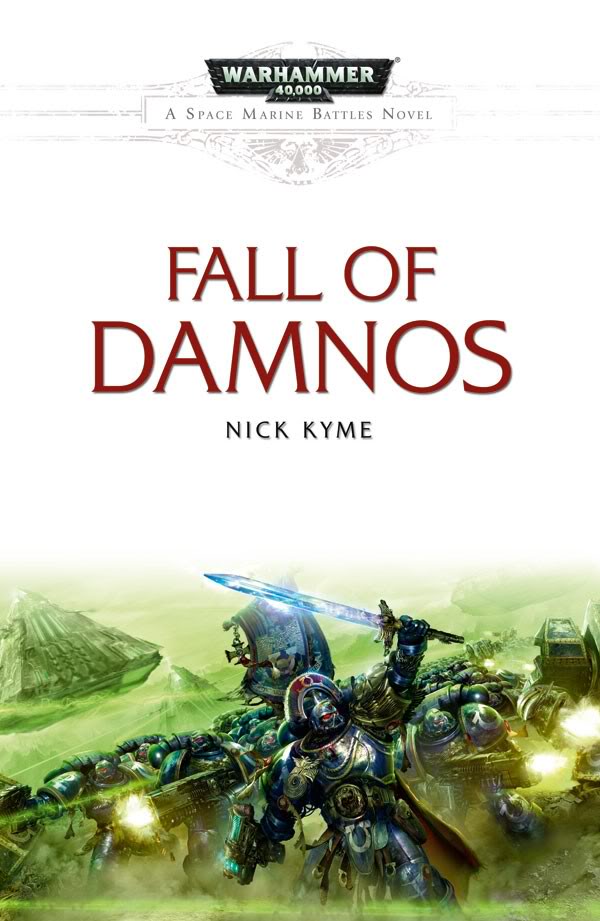
By the way; In this story, Damnos falls Just so you know.
And I got all that. What I wasn’t expecting was to walk away feeling sympathy for all of the characters, including the Necrons. The trick to a good action story is to make the reader/viewer/listener care about characters involved, and The Fall of Damnos does this by giving us an insight into the daily routine of the main characters, we see Ultramarines politicking in a ‘Greco-Romans in Space’ sort of way, we see the inhabitants of the doomed planet getting on with the daily routine and most interesting of all, we see the Necrons politicking and vying for favour and power within their own ranks. Given that Necrons are basically gothic cyborgs, this is a bit of a treat. It’s nice to see the evil robot monsters get a chance to actually be villains, rather than yet another faceless threat.
It’s not without its flaws; Kyme spices up the Ultramarines by giving them a bit more of political bent, and this isn’t explored strongly enough to be compelling. As fun as a 40K version of HBO’s Rome would be, Fall of Damnos really doesn’t have the space to cram it in, this is a book about big men with big guns shooting horrific monsters. The Ultramarines felt fairly interchangeable to me, and though this paralleled nicely with the robotic hordes, this element didn’t engage me strongly enough to work. Personally, I found the characters that happened to be ordinary people the most interesting; dragged into a war between titans, the human characters, from the plucky resistance fighters to the despair driven commander moved the story forward for me.
If you like the 40K setting, and like well written space marine battles, this is for you.
1: I deliberated a lot about writing book reviews; I’m a writer myself, and I’m especially interested in so called tie-in novels because I do love playing in other peoples creative sand-pits.
2: The fun thing about “tie-in” fiction is that the author can add depth to an existing world, yet they only have to explain aspects of the world that are relevant to the current story. That means the writer can litter the book with references for the fans, without alienating new readers. Its nifty, and I like it, though critics of “tie-in” fiction misunderstand this element entirely.
3: In the past, I’ve described the Ultramarines as “The Manchester United of the Astartes”. By which I mean they’re so popular and ubiquitous that people fall over themselves to find reasons to dislike them, because fans always like to whinge about the team at the top. The football metaphor doesn’t really work for other space marines, so I am unable to work out which chapter recently defeated the Ultramarine 6-1 in an Inter-Astartes Soccer Match. Probably the Imperial Fists.
4: Necrons are a peculiar mix of Undead monsters, cybernetics-gone-wrong and horror-from-beyond-time. They fit the classic sci-fi cliché of Cybermen and Borg, but also have an occult twist to them that reminds me of the darker sort of Cthullhu Mythos story.
Rocky with Robots
A recent trend in movies is to take a successful toy range and turn it into a movie. Battleships is coming out soon, and we’ve already had films based on popular Eighties toys like G.I. Joe and Transformers1. Real Steel seems to follow in this tradition by being based on Rock ‘Em Sock ‘Em Robots2. For those of you not familiar with the toy, it features a two robots in a boxing ring, and you pound buttons until one of the robots gets hit in the jaw and pops.
The movie follows pretty much in the same vein. It’s a boxing movie with giant robots in it. It’s set in world where people have grown bored of watching two adults pound the hell out of each with their limbs and instead pay to watch two robots being guided by adults pound the hell out of each other instead.

Man I used to pound the hell out of those things
The plot of the movie is pretty straight forward. Hugh Jackman plays down-on-his luck ex-boxer who lacks the patience and outlook to do well at the new hi-tech sport, making his way with the scraps he can find. Along comes his estranged, 11-year-old son, played by Dakota Goyo3, and together, after more than a little heartache, a lot of Father/Son bonding/arguments and buckets they team up to bring us buckets of robot on robot action.
Is it cheesy? Hell yes. Is it schmaltzy? Again, yes. Is it fun? You betcha. The baddies are nicely bad, the heroes are flawed yet sympathetic and you really find yourself rooting for the heroes at the end. They’ve blended every ‘kid does good’ and ‘Boxer on the come back tour’ movie together, and added giant robots, and it works. The robots look great, the acting does the job it’s supposed to and again, and it made my inner-eleven-year-old make little happy sound.
Now where’s my Rock ‘Em Sock ‘Em Robots…
1: I do wonder if they’ll do Visionaries. It’d probably be in 3D, but hey, Visionaries…
2: A toy, that wikipedia tells me, came out in the 60’s. It must have been still around in the 80’s, because I had a ‘made in Hong Kong’ version and it was one of favourite toys when I growing up. (And I know it’s not actually based on the toy, but it’s funnier this way.)
3: last seen as young Thor, in Thor. And surprisingly not saccharine for mop-topped blonde kid.
Rockets, Rayguns and Really Nice Tea
In case you didn’t know, I’m running a larp event at Hebden Hey Scout camp, the weekend of Friday, 30th March 2012.
It’s called Rockets, Rayguns and Really Nice Tea, and it’s a game that evokes the excitement of Dan Dare action stories and the creeping horror of Bernard Quatermass.
It’s a set in a world of two-fisted justice, rocket powered heroism, hidden horrors, lurking conspiracy and exploration. Square jawed heroes team up with brilliant academics and savvy politicians to unearth the wonders and horrors of a world still reeling from the Second World War. It is an alternate history larp that features very little steam, hardly any punks and a huge amount of fun.
Want to know more? Some handy, printer friendly downloads are here:
Setting information and timeline
Societies
Event Invite
Rules of the game
Equipment List
Booking Form
You can also email Rocketlarp(the at symbol goes here) gmail.com.

Did I mention it's a system that uses NERF? It uses NERF.
EDIT: A quick update. As described elsewhere, I eventually gave this project to very good friends to handle. They’ve done amazing things with it and you can find out more up to date information here:
Inner City Versus Outer Space
Riffs on the idea of an alien invasion have been redone countless times. Marauding creatures from beyond the stars have been defeated by everything from cowboys to Santa Claus in the past. But Aliens versus South London Hoodies? There’s a novel idea. What happens when you take a tedious British movie about urban decay and how tough it is to be a youth on the streets and drop alien monsters into the mix?
The result is Attack the Block. Director Joe Cornish1 has taken UK Film Council money and made a B-movie reminiscent of the sort of fun films Hollywood used to make in the 80’s, such as Critters, Gremlins and CHUD. It’s refreshing to see a British movie that’s fun for the sake of being fun, and a B-movie that isn’t trying to be anything else. That’s not say it’s not got subtext and clever social parody; of course it has, it’s been partially funded by Film4 so we expect that, it’s just that’s also has big monsters eating people.
The story is tight, the characters fun and interesting. Humour is injected throughout the movie, but so is a constant feeling of danger and terror. One flows naturally into the other, neither is particularly forced.

I wonder what would have happened had the aliens landed in Glasgow...
I would say that the first five minutes of the movie are the least promising; it really does start out as yet another British movie about how crap Britain is, even though those opening scenes are done suberbly. Maybe it’s the strength of the opening scene or the raw talent of actor John Boyega’s performance, but I utterly fail to have any sympathy for the lead character, Moses. Whereas the rest of the hapless hoodies all seem to be kids way out of their depth, Boyega’s “Good kid in a bad place, doing the best he can” fails to elicit any empathy; I suspect I’m supposed to feel for him, but I don’t. Boyega is simply too convincing as a thug. In a way this is a good thing as it lends a heavy dose of pathos2 to movie.
If you have a spare couple of hours and like monster movies of this ilk, you could do a lot worse than check this out. I hope to see more from Joe Cornish in years to come. It would be awesome if the UK could continue to produce this sort of scary fun.
1: Jo from Channel Four comedy programme Adam and Joe. Sad to say, no toy pastiche action in this movie. I’m sure someone will do one.
2: Pathos is like salt; you may not notice it’s missing when you first tuck into your meal, but once it’s added, it can improve things immensely.
He looked out and said to me “run for your life!”
These days, it seems you can’t be a fictional hero without having your own tourist attraction. Batman and Spiderman have their own roller coaster rides, Harry Potter has an entire theme park.
So what about The Doctor from the titular show, Doctor Who? Well, in a sort of way, he does. Crash of the Elysium is a Doctor Who themed theatrical production in which the audience play the starring role. Half ghost-train and half stage-play, you come face to face with one of the show’s most terrifying monsters, all the while running for your life. The overall experience is very evocative of everything we love about the show; thrills, chills, scary monsters and friendly time travelling space-wizards. The production is a theme-park ride with class and style, which is what you’d expect for such a venerable TV-show.
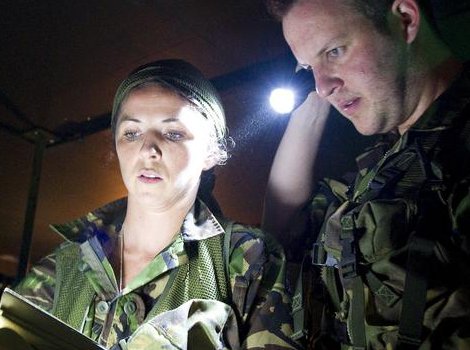
The acting is superb and engaging
Crash of the Elysium is of course, brought to you by Punchdrunk a theatrical company who specialise in this sort of thing. The show begins gently (like all good theme park rides) and then picks up very quickly, one moment you’re browsing some dry looking museum exhibits and the next moment,you are in an environmental encounter suit, face to face with mild peril. I won’t say much more about the plot, but if you do get to see the show, I defy anyone to attend and not get completely sucked in.
The production is also firmly part of the current Doctor Who series. Co-written by show supremo Steven Moffat, it features nods and winks to the ongoing series all the way through. This is no ‘tribute’ to the show, this is another episode of the current incarnation of The Doctor presented in a unique way.
Crash of the Elysium is one of many show’s that premiered earlier this year at The Manchester International Festival, and you will be able to catch it as part of the London 2012 Olympic cultural celebrations. If you can, do bring along a small child, or borrow a friend’s small child if you don’t have one of your own. I attended the ‘Over 13’s’ show and it was mostly adults, despite the show being written for children, as some of the plot points are aimed squarely at the young. That said, everyone attending immediately turned into delighted (and well-behaved) children, utterly enchanted by the production, the plot and the acting. My only criticism is that it only an hour long, and that I’m going to have to wait till next year to go on this ride again.
Rich Man, Poor Man, Beggar Man, Thief
They are, broadly, two different ways you can tell a story about spies; one involves gadgets, explosions, exotic locations and beautiful women. The other tends to involve paper work, surveillance, anonymous corridors and grumpy looking old men. We tend to be more familiar with the former, which is a pity, as the latter can be every bit as thrilling and exciting. Good spy thrillers mix action with paranoia to keep you on the edge of your seat throughout the story.
The movie Tinker Tailor Soldier Spy is two and half hours of grumpy old men being extremely paranoid at each other. As unappealing as that sounds, it’s very good. But then, of course it is, because each component of the movie, from the script to the direction is exactly right. The cast is brilliant; any film that sticks Toby Jones1, Gary Oldman and John Hurt in a room together would have to try pretty hard to fail, and Tinker Tailor does not disappoint. At the start of the movie, they spark of each other brilliantly and this sets the atmosphere for the rest of the feature. The rest of the cast are equally superb; Benedict Cumberbatch is perfect as the steadfast and brilliant Peter Guillam and Tom Hardy is equally superb as the heroic yet tragic Rikki Tarr.
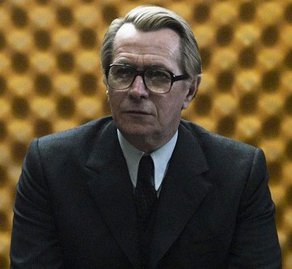
Gary Oldman has been Sid Vicious, Dracula and now George Smiley. That makes a strange sort of sense, in many ways.
The sheer weight of talent on the screen is enough to carry the movie through. However, as it’s a clever adaption of a John le Carré directed by Tomas Alfredson2. The result is brilliant, and I firmly expect it to sweep up all the Oscars. Even the imaginary ones.
In essence, Tinker Tailor Soldier Spy is a period piece about Cold War paranoia. This is a movie that is soaked in the fear and misery of the that time. The 70’s back-drop is drab and grim, nobody smiles and everyone is expecting the world to end in nuclear fire at any moment. Every element of the movie, from the direction to performances drips terror of an age we were all very happy to see the back of. This is not a spy-movie, this is movie about Intelligence agencies and the paranoia that surrounds them.
If tense, brilliantly directed, superbly acted dramas about paranoia, creeping despair and the spying game aren’t your thing, then avoid this. Otherwise, go see it if you haven’t all ready.
1: Yes, it’s another review about a movie with Toby Jones in it. What can I say, he’s probably one of the best actors around right now.
2: He directed Let the Right One In. Y’know, that brilliantly evocative vampire movie that was doing the rounds a couple of years ago? If you’ve missed it, seek it out.
 Ed Fortune