Archive
Pulgasari
Some movies are weirder than others. Take, for example Pulgasari. A North Korean monster movie, set in feudal times may sound pretty odd to begin with, but it gets even stranger when you realise that this was a movie produced by recently deceased dictator and all round bad guy, Kim Jong-il.
It gets stranger; Jong-il was a big fan of Godzilla movies (and at the time, merely the son of a tyrant), and had decided that he was going to boost North Korea’s movie industry. Rather than simply invest in film schools and encourage home-grown talent, he decided to go for the Bond-villain route of kidnapping an actress called Choi Eun-hee, who happened to be the ex-wife of a South Korean movie-maker called Shin Sang-ok, who was kidnapped by North Korean agents shortly afterwards. Kim Jong-il then imprisoned the pair and forced them to re-marry. Only then did he ask them to produce movies for the state. 1
So what about the movie itself? Well, it’s a big budget monster movie, in the style of Godzilla, that was made back in the Eighties. This means many of the effects rely on a guy in a rubber suit2 thrashing around and knocking down lots of models of buildings. This actually lends a lot of charm to the picture, which it needs when you consider it’s rather dark origins. It’s a period piece (as if they could make this even stranger), and it features lavish costumes and sets, as well as a huge cast. It’s also only 90 minutes long, which is about the right sort of length for this kind of thing.
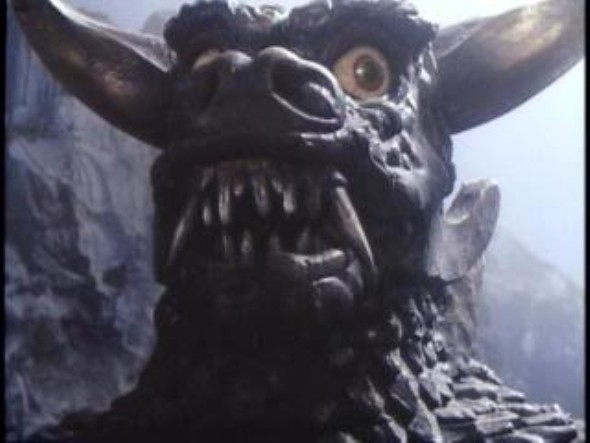
Cute, in a goofy looking giant metal eating monster sort of way
Like most good monster movies (and it is a good example of the genre), the plot focuses on the human elements, whilst the monster moves the story forward. At its core, Pulgasari is a tale of ordinary people overthrowing tyranny. The titular monster’s creation story is one of tragedy, it being created through the dying wish of a humble blacksmith forced to starve to death by an evil king. The creature grows by eating iron, and because most of the metal belongs to the kings’ army, it attacks him and his forces first. Eventually, of course, the monster turns on the people and has to be destroyed, but only after a great price has been paid.3
Much has been made of the story by those looking to read a deeper political context into the feature; it’s hard not to given the movies origins but in this case it really is a well made but dumb monster movie. I gather that the original folk legend the film is based on goes much the same way; it’s a parable on the dangers of wealth not being shared rather than a searing critique on a totalitarian regime. The monster turning on the people is more to do with that being a convention of the genre rather than any sort of social commentary.
Oh, and in case you haven’t gathered, this is a foreign movie with subtitles. So of course, the Americans remade it; it’s called Galgameth.
1: Seriously. The pair eventually escaped, by seeking political asylum with the Americans during a business trip to Vienna back in 1986. Shin Sang-ok changed his name to Simon Sheen, and went on to produce the 3 Ninjas series of kids martial arts movies. They have Hulk Hogan in them, which is all you really need to know.
2: Kenpachiro Satsuma, no less, the chap who played Godzilla from 1971 to 1995. The costume itself was produced by the legendary Toho Studios, the firm that produced all the original Godzilla movies.
3: Those aren’t spoilers by the way, that’s how monster movies are supposed to work.
Star Wars, in many dimensions
The Phantom Menace has recently been re-released in 3D. Apparently, I’m meant to be outraged by this, which is odd, as I wasn’t that worried about it back in 1999 when it first came out. My friends and I made a day of it, and all in all, it was a pretty lovely day with nice food, good company and a decidedly average special effects film at the end. Many of my friends and acquaintances seemed outraged that the movie wasn’t very good, which confused me a fair bit, because as far as I’m concerned, none of the Star Wars films are that great1.
George Lucas has said in the past that the thing he loves most about the franchise is the fun that kids have playing with the various toys, and this tells us all we need to know; Star Wars is not only a brand, but an excuse to go out and play with our imaginations. By a combination of accident and design, it has become a way to indulge in escapism, in any way you prefer. The actual movies are neither here nor there. They simply open up a rich and detailed fantasy world, one created by a vast number of people, and I don’t just mean tie-in writers and game designers. The reason Star Wars persists is because anyone who has enjoyed anything with the Star Wars brand on it has used it to tell tales that they have come up with themselves.
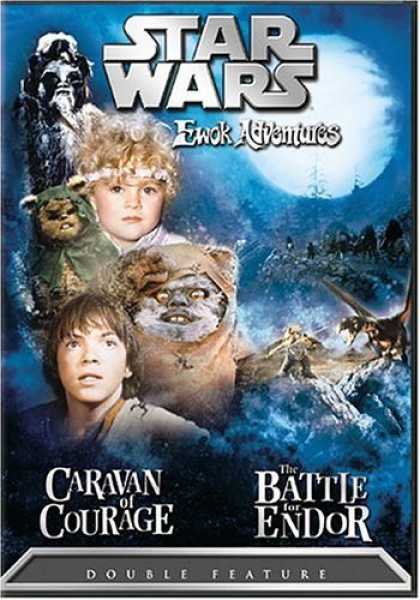
This should have been your first clue to not take it so seriously.
The reason people got so angry about the The Phantom Menace was less to do with the quality of the feature and more to do with the fact that many of us had already written that movie in our heads, countless times.2 Few of us will have actually expressed that story in any meaningful way, but the joy of Star Wars is that it’s a fantasy world we can easily share with others. It’s easier to play let’s pretend when we’re all on the same page after all. George Lucas created an amazing sandpit for us to explore, and then years later, we begrudge him for trying to bring new toys to the playground, rather than just leaving those toys in the corner and getting on with hard work of making stuff up.
It also doesn’t help that the Star Wars franchise moved on from its motion picture origins long ago. They are table top games, computer games, cartoons, novels and a plethora of excuses to dress up as people from that world. Many try to compare one experience to another, without stopping to consider that it doesn’t matter how you’re telling a story, the fun part is the story, not the medium. Granted, some people tell the tale better than others, but if are willing to try, you can find a Star Wars inspired thing that will please you. Lucas created a shared world and a common language that we can all enjoy, if we’re inclined to do so.
Of course, he also used that franchise to make himself rich and the brand frequently gets rented out to sell us things we don’t need or want, but that’s civilisation for you, using Yoda to sell mobile phones is no more irksome than using Robin Hood to sell breakfast cereal.
So the next time someone asks you to care about Star Wars, ask yourself, is it the brand you care about, or the stories you can use that brand to tell?
1: I’ll concede that The Empire Strikes Back is a great bit of Science Fiction Fantasy, but as it’s sandwiched between two decent but not spectacular movies, it isn’t all that.
2: Had people come out of the The Phantom Menace with full Jedi powers and a fully functioning laser-sword light-sabre, they would have still have found something to complain about.
Megashark Versus Giant Octopus
One of the things all journalists are taught from the start is to determine Who, What, Where and Why. With the movie Megashark versus Giant Octopus, I find myself at a loss to explain why. Why it exists and why on earth I watched it. For those who haven’t heard of it, it’s pretty much what it sounds like; a recently made creature feature movie, where two huge aquatic creatures duke it out.
Badly made schlocky movies can be charming in a quirky, funny-looking sort of way. Poor dialogue, terrible sets, awful special effects and badly written plot can add up to making an enjoyable experience. More often than not though, a bad movie is just bad, and Megashark versus Giant Octopus is an example of what happens when you try and make an entertaining but awful movie and fail.
The plot, for those who care, can be summed up thusly; The military accidentally shatters a giant block of ice, containing the titular characters. Both the octopus and shark proceed to go on the rampage, devouring battleships and airplanes in their path1.

A giant shark. Eating a bridge. Should be exciting. Isn't.
Scientists use science2 to arrange for both the shark and the octopus to attack either Los Angeles or Tokyo, before realising that it’s a terrible idea. Drawing inspiration from every school playground ever, they instead use science to get the two monster to fight each other, whilst they stand round on the edge of the battle chanting ‘Fight, fight’.
The two awfully CGI’d monsters then get down to the battle royale. Except they don’t, because the movie’s budget only allows for a series of standard, stock footage style animations. Until you watch this movie3, you’ll never have believed that a feature about two huge sea monsters beating each other up could be dull.
It also features Debbie Gibson, whom, if you’re from the United Kingdom, you’ll struggle to remember why she was famous, and will confuse her with Tiffany. (Who also makes a living making shitty movies.) This movie is simply bad in every way. You can try to find something to laugh at, but you will be struggling. I recommend you watch the trailer instead; it’s got all the good bits in it. (And by good bit, I mean it ends quickly.)
1: Yes, airplanes. Apparently, super-sized sharks can fly out of the water. Yes they can. Shut up
2: You can tell they’re scientists because they wear lab coats and nod sagely when they mix chemicals together. These chemical occasionally glow. This is the best bit of the movie.
3: Don’t.
Chico and Rita
To my utter delight, Chico and Rita has been nominated for an Oscar (Best Animation, no less1) which is about time. Given that it’s now available on DVD for about a fiver, I wonder what took them so long, but then the Oscars have never been very good at noticing foreign films.
So why does the Spanish language, animated feature film set in Cuba just before Castro happens deserve an Oscar? Well, probably because it’s one of the most beautifully rendered love stories ever to make it to screen. This is a tale of jazz pianist Chico and talented singer Rita, and how they try and escape their hum-drum lives to create something beautiful. It’s rich and evocative of pre-Castro Cuba, and though it romanticises that period in history, it’s also very blunt about the politics of the time. (Though this is not the focus of the feature).

Apparently, designer Javier Marisca created Rita in a dream. I can believe that.
It’s a tale filled with fiery latin passion, fantastic music (jazz, but don’t let that put you off) and eye-poppingly gorgeous moments. One particular scene practically sizzles on the screen. The characters are drawn in a strongly European comic-book style 2, each character oozing with their key character traits. (Rita drips sex-appeal, Chico is filled with pride and bravado). The art is lovingly detailed and it’s the sort of feature that reveals fresh things on repeated viewings.
Animation is at its most flexible and amazing when it uses the medium to create unique worlds. Chico and Rita exist in an idealised form of the Cuban music scene of the time. Cigar smoke wraps around the singers just so, the pianists are always impeccably dressed and the entire place is filled with beautiful people. At its core though, it’s a movie about what happens when art and passion meet and fall in love.
Spanish speakers will find some of the subtitled translation amusing, as they’ve (thankfully) gone for context-based translation over a more literal interpretation. This is a life affirming, thrilling little feature that I urge everyone to watch. If you find yourself in need of cheering up, I recommend it, though do bring the tissues; it’s as emotional as it is fiery.
1: It’s up against Kung Fu Panda Two and Puss in Boots amongst others. Frankly, those two movies, though nice, pale in comparison to this one. Kung Fu Panda may be all about confidence, and Puss In Boots certainly has a strong hint of passion, but seriously, Chico and Rita is the better work of art, and will dance a bolero around the competition.
2: If you’ve ever read the confusingly titled magazine “Heavy Metal”, you’ll know what I mean. Self Made Hero do produce a comic book version of Chico and Rita as well, and it’s worth your time; what it lacks in movement and music it makes up in artwork.
Ninja Terminator
The names of some directors are an almost certain guarantee of quality. The mention of Spielberg, Miyazaki or Scorsese can be all one needs to sell a film. Likewise, a few names guarantee that a movie will be awful, and yet still entertaining. Ed Wood, Joe Da’mato, Uwe Boll and of course, the master of the terrible chop-socky movie, Godfrey Ho.
Ho is best known for Ninja Terminator, for several reasons: Firstly, it’s his worst movie, which of course, given that he’s valued for being terrible, means that it’s the one most people like to ridicule, second, it’s actually several aborted movies spliced together (so the plot makes no sense) and thirdly, it takes some of the finest actor/martial artists of the time and utterly misuses them.
For example, Korean martial arts expert Hwang Jang Lee, an actor so iconic within his genre that martial arts homage Kill Bill repeatedly references his work, spends the entire film in a bright yellow goldilocks wig, for no discernible reason. Jack Lam, an actor known for his legs, spends of most of the movie driving a car, and Richard Harrison1, the actor who famously handed Clint Eastwood his career, cites Godfrey Ho’s movies (and this one in particular) as the main reason he retired from cinema.

This man is 7th Dan martial artist. I wouldn't mention how bad that wig is.
More jarringly, not only is this two failed movies re-edited to make a single failure, but the movies were shot 10 years apart from each other. On different film stock. In different locations. Ho cunningly stitches the two movie plots together through the use of a novelty Garfield telephone and a battery operated toy robot. 2
The plot, such as it is, features the efforts of good ninjas trying to take down the Ninja Empire, through the use of a magical statue. Or something. Frankly, important parts of my brain began to shut down round about twenty-minutes in when crabs turned up for no apparent reason.
In short, Ninja Terminator is everything you’d expect from a movie with a name like Ninja Terminator, and it will delight connoisseurs of crap. Fans may be interested to learn that there is another Ho movie called Ninja Protector. It’s not a sequel, but it has the same actors. And some of the same scenes.
1: If you have no idea what he looks like, imagine a weaponised version of cricket commentator Des Lynam. With a more terrifying mustache.
2: Sadly, Ho is not a secret master of the subtle and the surreal. He just happens to own a Garfield telephone.
Rare Exports
It is the season for Christmas related things, so let’s talk about Rare Exports, a rather charming action/adventure movie dealing with the true origins of Santa Claus. Unlike the usual Hollywood schmaltz starring some TV comedian, Rare Exports takes the clichéd ‘Santa Movie’ idea and puts a distinctly Finnish spin on the whole affair.
All the elements of the traditional Santa Movie are here; a little boy believes in Santa (despite no one else doing so), there’s a local bully causing said little boy a load of trouble and the whole thing is set in a bleak social setting, where only the true meaning of Christmas can save the day.
Sounds hum-drum so far, but Rare Exports is nothing of the sort; the little boy who believes in Santa does so because he realises the terrible truth about Father Christmas, and the dark and deadly secret that lurks in the nearby mountain. The bully is just another boy, looking out for his father, and the bleak setting is the border between Finland and Russia.

Jorma Tommila plays the ‘grown-up’ and does so very well. He also happens to look like several people I know.
In short, this is a mix of ‘secrets man should not know’ horror and ‘Christmas time fare’, and the blend works fantastically well. Imagine, if you will, what you would get if The Thing and The Santa Clause had a baby. Now imagine it with more white bearded, naked old men and you’ve got a good idea what this is like.
The father and son pairing that the movie hangs on works so well because the actors actually are father and son. The characters are believable and react to insane circumstances in believable ways, and though the bulk of the movie is in Finnish, the subtitles don’t get in the way of the action at all. In addition, the movie is filled with little gags and references that make it a joy to re-watch. The “Safety Instructions” are especially fun.
This little Finnish film has been around for a while; it started life as a series of internet shorts and has been doing the rounds in foreign language cinemas for some time now. With any luck, the recent DVD release will give this cracking little movie a much deserved following. I heartily recommend this to anyone looking for an antidote to overly sentimental seasonal entertainment.
Oooh, Shock Treatment…
Did you know that The Rocky Horror Picture Show1 had a sequel? Are you now wondering why you’ve never seen or heard about it? Perhaps, you suspect, there’s a reason this movie has been buried? Well, curious chap that I am and buoyed by a healthy sense of curiousity, I set out to investigate Shock Treatment.
Looking back, the fact that my local DVD merchant thrust the movie into my hand for no charge, with a slightly haunted expression should have been a sign, I suppose. Shock Treatment is one of those ‘sort of sequels’. Some of the characters are meant to be the same, but really there’s little to link one movie to the other, the term sequel in this case really meaning ‘by the same people who brought that thing you enjoyed’.
The premise is fairly straight forward; Brad and Janet, the couple from Rocky Horror are having marital problems, and show in an effort to fix their relationship, end up mired in a bizarre reality TV show. Now, what this movie almost becomes is a precursor to films like the The Truman Show. There is so much potential for it to be fantastic commentary on the rise of reality TV, on the perils of fame and the self-help industry. What we get instead is a disjointed mess. Many of the individual elements of the production work fantastically well. For example the cast features some great talent2 such as Jessica Harper and a surprisingly sinister Rik Mayall. Sadly, it fails to be greater or even equal the sum of it’s parts.

As visually arresting as it's sibling, but fails to be as charming.
Like its older, much better known sibling, it has some ace songs. Little Black Dress and Bitchin’ in the Kitchen are just two amidst a great selection of fun tunes this movie has, but both suffer from not being terribly well presented. Shock Treatment feels rushed and bitty, and makes you suspect that the producers of The Rocky Horror Picture Show just got lucky the first time.
It’s a real shame because Shock Treatment could be something much better than it is. I’d love to see it re-imagined and re-made, with a slightly re-worked story and better produced tunes. As it is, it deserves its place in the bargain basement bin. If you plan on hosting a ‘terrible movie night’, give this one a go, as it’s wacky and odd enough to entertain a room full of heckling drunks. But apart from that, isn’t really worth your time.
1: Often, when geeks talked about Rocky Horror, someone quotes the TV series spaced, which describes Rocky as “boil in the bag perversion for sexually repressed accountants and 1st year drama students…”. I don’t entirely agree with this. Rocky Horror fandom is primordial cos-play, and we have moved on from dressing up like Riff-Raff to dressing up as anything from any movie. This is no bad thing, but is one of the reasons why the movie is ageing so badly. Dress-up is no longer as remarkable as it once was.
2: And also, sadly, Barry Humphries. AKA Dame Edna. Who has never been funny.
Doctor Who, the other movies
With all this talk of a potential new Doctor Who Movie, I think it’s time to talk about the Timelord’s previous trips to the big screen. By which I don’t mean the 1996 TV movie featuring Paul McGann. I mean the big screen.
In the Sixties, Doctor Who was a new and exciting show, having first reached our screens in 1963. By 1964, Dalekmania was sweeping the nation. The pepperpot dictators where new, exciting and nothing of their like had been seen before, especially on national television. By 1965, Amicus Studios 1 had released Dr. Who and the Daleks and would later release Daleks’ Invasion Earth: 2150 A.D. in 1966.
They planned to release a third, but it never got made. This is probably because the first two movies where terrible. They where panned by critics at the time and modern viewers have a lot of difficulty with them as well. When they were made, Doctor Who was still in its infancy as a show; The First Doctor, William Hartnell, played The Doctor as an unpredictable and crochety old man with a mysterious past. In the movies, the horribly underused Peter Cushing looks like Hartnell, but the character is entirely different. For a start, he’s called Doctor Who (as in his surname is “Who”), and he’s clearly cast as a kindly old white-haired genius.
All mystery is stripped from the titular hero in the first five minutes of the movie. To modern viewers, Cushing’s character is mortal and bland, and an elderly, doddery cliché at that. Action sequences are pretty much handled by younger characters2 , and we don’t really care about any of the cast. Compared to even the earliest episodes of the classic series, it pales in comparison. (This is quite a feat, as the movies are in colour).
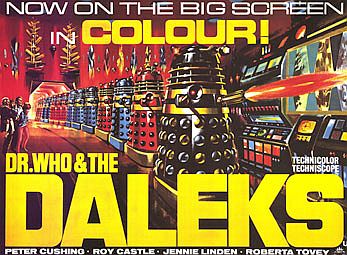
On the other hand, the classic movie posters look fab
The plots are stripped down versions of Dalek stories from the original series. This improves the pacing, but also makes the whole thing less engaging. Even the pleasure of seeing multi-coloured Daleks and the oddly painted Thals does not make up for intense boredom the movies produce.
As family-friendly action movies made in 60’s go, they aren’t that bad. But because it features Daleks and a TARDIS, we expect more. I can remember watching both these movies as a child, and being very disappointed. They are the Doctor Who equivalent of being promised chocolate and getting carob.3.
If I was producing a new Doctor Who movie today, I would give these movies some repeated viewings. Their greatest flaw is that they imitate the elements of the original series without any of the charm. Even though there is now a greater body of lore surrounding the show, the Peter Cushing movies should serve as an example as to why one should not re-invent the wheel when one is playing in someone else’s creative sand-pit.
1: Interesting studio, Amicus, often mistaken for Hammer Films as they also tended to make movies starring Christopher Lee and Peter Cushing. Dr Terror’s House of Horrors is one of theirs.
2: Roy Castle in the first one, Bernard Cribbins in the second. They play characters of course, but it really doesn’t matter, because both actors don’t have any real chance how talented they are. Both Cribbins and Castle are charming of course, which is why both went on to become much loved celebrities. (In the UK at least).
3: Carob looks like chocolate, and sort of tastes like chocolate if you don’t have taste buds. It used to be billed to concerned parents a healthy, vegetarian alternative to chocolate, but I suspect it was actually produced to instil into children a deep seated mistrust of vegetarians
Inner City Versus Outer Space
Riffs on the idea of an alien invasion have been redone countless times. Marauding creatures from beyond the stars have been defeated by everything from cowboys to Santa Claus in the past. But Aliens versus South London Hoodies? There’s a novel idea. What happens when you take a tedious British movie about urban decay and how tough it is to be a youth on the streets and drop alien monsters into the mix?
The result is Attack the Block. Director Joe Cornish1 has taken UK Film Council money and made a B-movie reminiscent of the sort of fun films Hollywood used to make in the 80’s, such as Critters, Gremlins and CHUD. It’s refreshing to see a British movie that’s fun for the sake of being fun, and a B-movie that isn’t trying to be anything else. That’s not say it’s not got subtext and clever social parody; of course it has, it’s been partially funded by Film4 so we expect that, it’s just that’s also has big monsters eating people.
The story is tight, the characters fun and interesting. Humour is injected throughout the movie, but so is a constant feeling of danger and terror. One flows naturally into the other, neither is particularly forced.

I wonder what would have happened had the aliens landed in Glasgow...
I would say that the first five minutes of the movie are the least promising; it really does start out as yet another British movie about how crap Britain is, even though those opening scenes are done suberbly. Maybe it’s the strength of the opening scene or the raw talent of actor John Boyega’s performance, but I utterly fail to have any sympathy for the lead character, Moses. Whereas the rest of the hapless hoodies all seem to be kids way out of their depth, Boyega’s “Good kid in a bad place, doing the best he can” fails to elicit any empathy; I suspect I’m supposed to feel for him, but I don’t. Boyega is simply too convincing as a thug. In a way this is a good thing as it lends a heavy dose of pathos2 to movie.
If you have a spare couple of hours and like monster movies of this ilk, you could do a lot worse than check this out. I hope to see more from Joe Cornish in years to come. It would be awesome if the UK could continue to produce this sort of scary fun.
1: Jo from Channel Four comedy programme Adam and Joe. Sad to say, no toy pastiche action in this movie. I’m sure someone will do one.
2: Pathos is like salt; you may not notice it’s missing when you first tuck into your meal, but once it’s added, it can improve things immensely.
Rich Man, Poor Man, Beggar Man, Thief
They are, broadly, two different ways you can tell a story about spies; one involves gadgets, explosions, exotic locations and beautiful women. The other tends to involve paper work, surveillance, anonymous corridors and grumpy looking old men. We tend to be more familiar with the former, which is a pity, as the latter can be every bit as thrilling and exciting. Good spy thrillers mix action with paranoia to keep you on the edge of your seat throughout the story.
The movie Tinker Tailor Soldier Spy is two and half hours of grumpy old men being extremely paranoid at each other. As unappealing as that sounds, it’s very good. But then, of course it is, because each component of the movie, from the script to the direction is exactly right. The cast is brilliant; any film that sticks Toby Jones1, Gary Oldman and John Hurt in a room together would have to try pretty hard to fail, and Tinker Tailor does not disappoint. At the start of the movie, they spark of each other brilliantly and this sets the atmosphere for the rest of the feature. The rest of the cast are equally superb; Benedict Cumberbatch is perfect as the steadfast and brilliant Peter Guillam and Tom Hardy is equally superb as the heroic yet tragic Rikki Tarr.
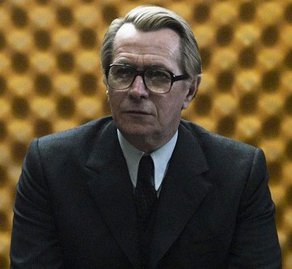
Gary Oldman has been Sid Vicious, Dracula and now George Smiley. That makes a strange sort of sense, in many ways.
The sheer weight of talent on the screen is enough to carry the movie through. However, as it’s a clever adaption of a John le Carré directed by Tomas Alfredson2. The result is brilliant, and I firmly expect it to sweep up all the Oscars. Even the imaginary ones.
In essence, Tinker Tailor Soldier Spy is a period piece about Cold War paranoia. This is a movie that is soaked in the fear and misery of the that time. The 70’s back-drop is drab and grim, nobody smiles and everyone is expecting the world to end in nuclear fire at any moment. Every element of the movie, from the direction to performances drips terror of an age we were all very happy to see the back of. This is not a spy-movie, this is movie about Intelligence agencies and the paranoia that surrounds them.
If tense, brilliantly directed, superbly acted dramas about paranoia, creeping despair and the spying game aren’t your thing, then avoid this. Otherwise, go see it if you haven’t all ready.
1: Yes, it’s another review about a movie with Toby Jones in it. What can I say, he’s probably one of the best actors around right now.
2: He directed Let the Right One In. Y’know, that brilliantly evocative vampire movie that was doing the rounds a couple of years ago? If you’ve missed it, seek it out.
 Ed Fortune