The Lime In the Coconut
I was listening to the Reservoir Dogs Soundtrack recently, a collection of music that many people who happened to be teenagers in the 90’s happen to own, partially because Reservoir Dogs was the coolest movie ever back in the 90’s and mostly because it’s a really good collection of songs. Anyway, after I’d finished my dive into nostalgia by jumping up and down around the room to Blue Swede’s Hooked On A Feeling, I started to ponder the question of my generation.
What the hell is Harry Nilsson’s song Coconut all about?
It doesn’t mean anything1. There’s no subtle message to the song, no hidden meaning. The simple truth is that both coconuts and limes are things that people eat when they’re feeling a little bit ill. Both bits of food are packed full of stuff that’s good for you (apparently) and the words have nice feel to them. The lyrics are sung in a very specific way and it’s fun to wrap your laughing gear round co-co-nut, preferably whilst shaking your bum and having fun.
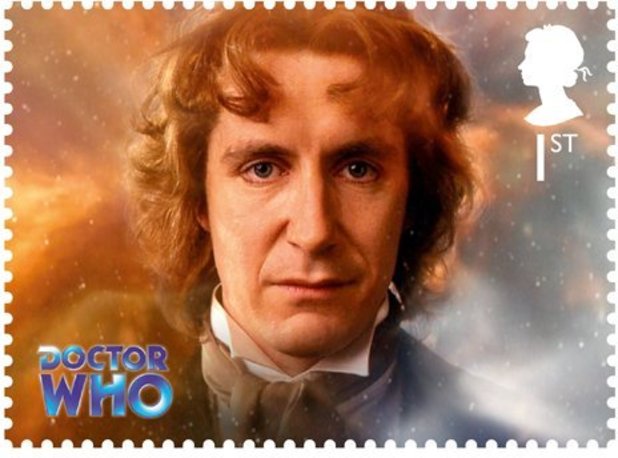
“I love humans. Always seeing patterns in things that aren’t there”
That hasn’t stopped people from endlessly deciding that it must mean something. There’s something about humanity’s ability to take a simple song about nothing of real consequence and decide that it must contain the wisdom of the ages. For some of us it’s not enough to simply wiggle our bodies about and have a giggle, everything has to mean something. This makes everything terribly serious, even having fun becomes an academic endeavour.
“It means nothing” is as a valid and important meaning as any other.2 Sometimes simple is good. The world is filled with meaning and context after all, not everything needs layers. If you really need a meaning, try this one on for size; Coconut is a request to shut up and dance. Stop your jaw from flapping and your chin from pondering and have a little jiggle.
1: Okay, we could make a serious argument between Authorial Intent and Critical Response, but honestly if your critical response to a silly song about fruit is to turn it into something dark and mysterious then you’ve pretty much left the realms of valid criticism and moved into the mystical land of pulling stuff out of your arse.
2: As a response, it’s almost as important as that great and powerful answer “No one knows”, though the response to that should always be “well let’s find out”, even if the answer turns out to be a cosmic shrug of the shoulders.
A Game of Clones
They are currently about a dozen novels sitting on my ‘To Be Read’ shelf at the moment. 1. Given that fantasy is ‘in’, roughly two-thirds of those are fantasy novels. Can you guess what it says on the back of all but one of those books?
They all claim that if you like A Game of Thrones or George RR Martin then I’ll love this book. Not only is this boring, it’s also utterly useless as a piece of promotional material. I don’t believe a word of it, think “ho hum” and skip past the blurb. An opportunity wasted all due to a lack of originality. Then I get snarky.
For a start, in what way like A Game of Thrones is it? Does it feature a vast and complex fantasy world with warring family factions? Incestuous characters? Extremely awkward sex scenes? Or am I to assume that the novel series is going to take a long time to get to a conclusion? Also, how like George RR Martin. His body of work is pretty broad – I assume they mean his popular fantasy series but they may be implying it’s a clever anthology series or proto-urban fantasy. His style has evolved over the years, which George RR Martin do they mean?

I wonder how many stud animals are called Winter?
I get why blurbs are written this way. A Game of Thrones is very popular right now and marketing types want to grab a little bit of that success in order to shift units. The problem is that over using a limited number of names makes a nonsense of the process. They can’t all be identical and I am hoping they aren’t. It also diminishes us all. It insults the famous author by implying that their unique and popular voice is easily mimicked. It insults the creator of the novel by implying that the book is derivative and most of all it insults the reader by assuming that we will only recognise a limited number of names.
Comparing things to other things is a valid way of describing anything, but you have to assume a broad palette. Good blurbs that name check other writers use lots of different names. If a book claims to be reminiscent of four or five different people, I have a better chance of recognising who some of them are, and get a better feel for what the work is like. Using less well known authors also celebrates and promotes the diversity of writing styles out there, and surely getting the word out there is the aim of game?
1: I say shelf, it’s a stack. I tend to keep all the board-games, DVDs, books and other physical objects awaiting critical evaluation in one place in order to keep a track of what’s going on. E-books and the like means that I can’t really tell at a glance how much work I’ve got to do, but it’s a handy rule of thumb. A dozen is a good number, busy without being too busy.
Life Sized Imperial Knight Titan, anyone?
So if you’re a massive Warhammer 40,000 nerd (which you may have noticed that I am) then you won’t have missed the fact that they’ve recently launched models of the Knight Titans. These are meant to nine-metre tall walking robots that do the scouting and skirmish work for much larger giant robotic killing machines.
I am a big fan of this idea, and it got me thinking about Zoids, those robotic skirmishing toys from the 80’s which happened to also have a great comic strip written by none other than Grant Morrison. They too were meant to be dinosaur sized, the smaller ones clearing the way for the bigger ones.
Someone even made a huge model of the big daddy of all Zoids, Zoidzilla. It was on Blue Peter and did the rounds at various fayres and festivals of the time. It roared and looked cool.

This is the only picture I could find of it , a family snap of chap called Alex Light. He doesn’t look like that any more 🙂
So this got me to thinking; maybe someone will make life-sized Imperial Knight? They’ve done Drop-Pods and tanks in the post, how difficult would it be to make a giant killy robot statue? (Probably very, but still).

Wouldn’t fit in the back garden, sadly.
True Believers
On today’s show we talked to Stuart Mulrain, who is organising The True Believers Convention.
The plan is to create a regular UK based Comic Convention at the famous Cheltenham Racecourse in early February. If they pull it off, this will make a rather splendid start to the convention season. This will also nicely book-end the Leed’s based Thought Bubble, which happens in November, which feels like way too long to wait.
Looks super, thanks for asking.
You can find out more on oktruebelievers.com and they’re currently running a Kickstarter with some interesting rewards.
Mr Banks versus The Grumpy
More and more these days, it seems every Hollywood movie that comes out immediately hits a wall of criticism for simply existing, often weeks before anyone has actually seen the thing. The movie that’s currently enjoying this sort of attention is Saving Mr Banks, a star studded retelling of the production Mary Poppins, focusing on media mogul Walt Disney (played by Tom Hanks) and the creator of the Mary Poppins and children’s author, PL Travers (played by Emma Thompson).
Predictably, it’s already drawn criticism that the film doesn’t focus on Traver’s back story enough; she was an interesting person with a rich and full life, and the movie focuses on a narrow band of her experience. Those looking to fling mud also point out that Disney have made a movie about their founder that paints him in a positive light, which is an odd criticism when you consider it; why would a light-hearted feature about the creation of a classic children’s movie overfill it’s plate with the darker side of the human condition? Critics seem keen to dig out their grudges against Hollywood and Disney and particular, and whine at length at about how unfairly the material has been treated.

Partially, this post is an excuse to stick this image on my blog
This approach both confuses and amuses me. Because if I wanted to be educated and informed, I’d pick up several books on the matter, perhaps seek out a few documentaries. Movies like this are meant to entertain first and foremost1. Being critical of this sort of movie whilst failing to acknowledge it’s validity as a source material is to fundamentally miss the point.2. A word to the wise; simply ranting about how a dramatisation isn’t as historical accurate as you want it to be is one of those things people do to appear deep and clever, but typically reveals them to be pedantic, shallow and rather mean instead.
Disney can be relied on to entertain; that’s their job and they’ve gotten better and better at it over the years. If you’re expecting Disney to teach you the real and true history behind some of its classic works, then that’s either naïve or you’re deliberately looking for things to be snarky about.
Let’s be honest, most of us had not even thought about Travers until this film came out. The movie is almost fifty years old, so many of saw the film on telly when we were too small to consider who made the film or what its origins are. It’s a familiar thing that has always been there, so it’s likely that you’ve taken its existence for granted. That fact alone makes Saving Mr Banks something I want to see, I would hazard a guess that those who already knew about Traver’s life are now vastly outnumbered by those who have gone out and educated themselves as a result of this recent exposure.
1: Put it this way, you are as likely to learn real Scottish history from Highlander as you are from Braveheart.
2 : I call this the Daniel Day Lewis effect. To my knowledge, Lewis has never appeared in a movie based on history that didn’t take total liberties with the source material.
The First Show
So, the first leg of Operation: Gobshite has finally landed1, and it’s radio related. This Sunday was the first ever episode of The BookWorm, a little book show that I co-host with my friend Ninfa Hayes and produced by AL Johnson. You can catch it every Sunday on Fab Radio International
It’s meant to be a rather irreverent look at the book world. We’re not Radio 42 by any stretch of the imagination, and are quite far removed from taking ourselves seriously. We love books, and draw our inspiration from the fantastic worlds we find between the covers. We also laugh a lot. It’s pretty much an excuse for me to do some of the things I love to do; talk to creative people and get enthused about creative things.
It’s a relief to have the first show live and done. After weeks of practice, worry, pondering and generally messing about we finally went live, and it was glorious. Things didn’t go completely smoothly, but that’s all part of the fun.
This is not my first radio show; I presented a rock radio show in college, and I’ve been a contributor to other cool shows in the past, but The BookWorm feels like I’ve finally found my groove. Time will tell, but it’s been a fun ride so far. Listen live at 12pm GMT3 Every Sunday.
1: Like a Martian War Machine, the charmingly titled Operation Gobshite has three legs. Talking nonsense on a Radio Show is only one part of this.
2: Fab Radio International is very much about being alternative. It’s very much influenced by the sort of innovation, co-operation and free-thinking that defines the city of Manchester, and it has this wild feel to it that is rather fun.
3: 7am EST. Sorry colonials.
Lord of the Flies, with cheese
A well placed, witty yet dismissive one-liner can be the bane of any fandom, as anyone who’s a fan of Babylon 51 can attest when the someone quotes Spaced at them for the hundredth time.
So I fully expect that with the release of The Hunger Games: Catching Fire, the dull and unoriginal will trot out the tired old joke about Suzanne Collins’ hit series that “The Hunger Games is Battle Royale with Cheese”. I promise I won’t hunt those people down and beat them with a Pulp Fiction DVD2. There’s a lot to get annoyed by this gag though; let’s break it down.
It was funny a couple of years ago, but only a little bit funny. A dry gag on a boring day, though one with a hint of malice to it. Unlike a meme, it hasn’t evolved into anything more amusing. It’s also a terrible comparison. Koushun Takami’s 1999 novel is much more of a thriller, filled with direct commentary on turn of the century Japanese attitudes to youth , whereas Suzanne Collins novel is much broader in scale, owing more to 1984 than anything else. Both deal with the turbulent emotions of the young, and share a similar idea. But saying one comes from the other is a little like saying Star Trek and Star Wars are copies of each other, because they feature conflict in space.
What people are really doing is trying to claim that The Hunger Games copied the Battle Royale, and that the latter is somehow superior to it’s clone. If you’d seen both movies, or (gosh) bothered to read both books, this would strike you as obvious bollocks. They’re trying to claim kudos for identifying one work as some how better than the other, without examining either.That irritates my internal critic, because both books (and their movies) are worth your time, just in different ways.3
The ‘joke’ teller is pulling the old trick of saying “Hey, I was into this when it was obscure”, which at the very least is gauche, if not out and out false. Surely, if you’re a fan of this sort of dystopian fiction, you’d be talking about William Goulding? It also puts the boot into Young Adult fiction. For some odd reason people lump the The Hunger Games in with The Twilight Series4, because they’re aimed at the young. There’s a dash of snobbery here; a sort of ‘how dare young people enjoy dystopian fiction’ going on, which is out of order when you stop and think about it.
1: If everyone who memorised the line from Spaced had actually watched Severed Dreams or The Deconstruction of Falling Stars, well they’d probably still take the piss, but in a less boring way.
2: Though if I did, I’d leave the DVD in the DVD player first.
3: The Battle Royale translation into English is a bit tricksy and a bit dry; try the manga instead. The Hunger Games is a better read though, it really is.
4: A rant for another day, but I do frown on those who rip into Twilight fans, because I remember what it was like to be young and into something everyone thought was rubbish.
The Book Worm Radio Show
So, from the 24th of November onwards, I’ll be teaming up with my friend Ninfa Hayes to present and co-produce The Book Worm. The show will be hosted on Fab International Radio, a new station that launches that date. It’s one of those new fangled Internet radio stations, which means we don’t have to worry to much about polluting the airwaves.
It dovetails in nicely with the work I’m doing for Starburst, and it means that the more recent interviews I’ve done with authors and publishing types have been recorded for radio as well as text (which makes the process a little different, though not by much. I’ll explain that in a future post).
I’ve done radio things before; my first media gig was hosting a late night alternative rock show when I was 16 on a very local and parochial station. Luckily, no tapes survive of this particular sin against sound and sense. I also reviewed movies1 for the same station, doing a bit of a Mark Kermode impersonation at the time. (I had the quiff and the correct level of pretentiousness. In fact I still have those things.) The last radio thing I’ve done was the rather fabulous Programmed For Damage, an alternative music show filled with weird tunes and nonsense. I didn’t really do much on that show except watch my friend Phoenix do all the hard work and talk nonsense.
The BookWorm is just the start of some fun things I have planned for 2014. You may be able to guess that it’s all going to be tied in to telling stories, talking about cool things and generally having a laugh, but watch this space.
More details on the station launch, when I have them.
1: Not the first time I reviewed books though; I’d been doing that for the school paper for a while before the local station opened up. First book review I ever did was Good Omens, in case you’re wondering.
Press Gang
There is an odd thrill in discovering that a particular artist or creator that you admire presently has also created things in the past that you also really liked, especially when you can learn more about that persons process simply by rewatching or re-reading their old stuff. A recent example for me was rewatching all of Press Gang1
For those not lucky enough to be British teenagers in the 80’s, Press Gang was a kid’s tv show that told the tale of a newspaper ran by school children. It isn’t a school newspaper, the premise is that it’s a local paper targeted at the youth audience2. This Junior Gazette is ran by the tyrannical Lynda Day (played by Julia Sawalha (who would go on to be the straight woman in Absolutely Fabulous), and she is supported by a cast of misfits including a chap called Spike3, who spends most of the series trying to pursue Lynda romantically.
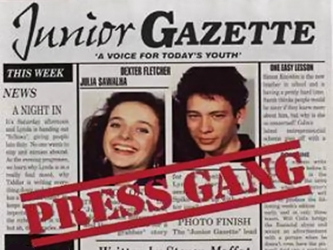
Oh so eighties
At its heart, it’s a drama about truth and beauty, and yes, I know how that sounds, but hear me out. The beauty in this case isn’t the constant struggle for romance and happiness (though that is part of it), but the burning desire for unobtainable perfection. Lynda wants the paper to be perfect, Spike strives to be desired by all, the marketing manager Colin wishes to own all the money in the world and so on. The cold light of truth shines on all of these desires and is represented by the newspaper itself, which every episode must carry on no matter what. This allows the show to be silly and serious at the same time; one part of romantic comedy farce and the other part serious teen drama.
This is the framework for some rather dazzling stories that still work to this day. I thought that the more melodramatic scenes that involved themes such as teenage suicide, abuse and the death of the young would have less of impact on me now that I’m a more world weary type of chap, but the show still packs an incredible punch and this is all due to the incredibly well rendered characters and the wit and wisdom that seems to be burnt into almost all of the dialogue.
It certainly isn’t perfect; it suffers a little bit from the ‘moral of the week’ formula all too common in Eighties dramas, and is hampered by that decades unwillingness to be blunt about what it’s trying to say4. The performances are superb, and when it is good it is very, very good. Some of the ideas and scenes are clearly a first draft for more memorable moments of Moffat’s later shows; the slapstick of Coupling can be seen in some of Press Gang’s sillier moments (usually featuring the hapless gobshite Colin), and the relationship between Lynda and her best friend Kenny has echoes with Holmes and Watson in Sherlock.
The old show is well worth a re-watch, but be warned; you will find yourself rewriting the last episode in your head for weeks, if not years, to come.
1: Of course I’d known for years that Moffat was behind Press Gang and Coupling but the thrill only becomes obvious when you take the time to experience the earlier works again.
2: The 80’s were obsessed with capturing ‘youth audiences’ as if young people were this new and strange alien culture that had recently come to Earth. Looking back on it all, I cynically wonder if the 40-something commissioning editors weren’t merely trying to recapture their own youth.
3: Played by South London’s own Dexter Fletcher with a not-as-good-as-you-remember American accent, He went on to be in a wide range of British movies, typically as ‘slightly crazy cockney geezer’. We try not to talk about his stint as the presenter of kids show Games Master.
4: Back in the 70’s and 80’s, TV programming made the mistake of taking idiots with too much time on their hands too seriously. This severely hampered what could talked about on telly, especially children’s drama. Proto-trolls such as Mary Whitehouse and her ilk deserve their own blog post however, so I’ll talk about them some other time.
International Please Don’t Pirate Books Day
Over on Chuck Wendig’s blog Terrible Minds he invited people to talk about Book Piracy. Now it being me, the first thing that sprung to my mind was a dystopian Waterworld style future in which the most precious things in the world are books.
After all, if most of the landmasses on the planet became flooded and we all lived on re-purposed ships and barges, things that float would be at a premium. Those floating villages that could rig up enough power to run electrical devices probably wouldn’t waste that precious resource on e-readers, so it would be down to keeping surviving collections of books in a safe and dry place. Librarians would be more heroic than they are today, carrying shotguns and strictly enforcing fines.
All of this would lead to book piracy, of course. Tricorn wearing men and women would roam the seas in powerful ocean-going vessels, seeking out the precious booty of books. Libraries would be the targets of these terrible raiders (who presumably speak in Cornish accents), and librarians would have to protect those who wish to steal these stores of knowledge for their own selfish gain. Huge campaigns would be waged over the last surviving copies of House on Pooh Corner and adventurers would go off on quests to find the legendary “Amazon”, a mythical place that they say is filled with books.

Floating Villages are not a good place to store books
Of course, when they say “Book Piracy” they might mean illegal file-sharing. It’s an interesting problem that isn’t as modern as we like to think it is. Art, be it movies, music, or books, needs to be shared and enjoyed by the community in order to be worth anything. As someone who makes a very modest living from writing, I want my work to do two things; be enjoyed by as many people as possible, and I also want to be paid. If the work isn’t good enough, it doesn’t sell. If I charge too much, it doesn’t sell, and both of those are fine; it’s on me to make sure it’s good work, reasonably priced and on time. If everyone steals my work then I don’t get paid at all, and I have to find something else to do in order to stay safe, fed, happy and living.
People will always seek to share art. This is such a fundamental thing that we even have a whole skill-set devoted to it. People train to be librarians, museum attendants and curators. A society that seeks to punish someone for wanting to enjoy music, view dramas or read books has gone wrong somewhere; we need to feed our brains almost as much as we need to feed our bellies, and if you try and deprive them of this right, then the metaphorical pirate ships will arrive.
The modern argument about file-sharing seems to be one of greed. On the one extreme you have people who wish to take everything for granted and never pay anyone for anything. On the other extreme you have people who want to charge people large sums of money for anything anyone has ever created. Neither of these are sensible approaches, a good book should not be the privilege of the wealthy or those with flexible morals. The middle ground for this debate is that of the public library, and subscription sharing services like Books Free. I like the idea of a service that mails books to me for a modest fee, though I’d be happier if they made sure the fee stayed modest and within the reach of everbody.
What is your take on this debate? Comments below please.
 Ed Fortune