Archive
Bring Back Jupiter Moon
Once in a while, there’s a rush of interest when some actor/director/geek celeb mentions the possibility of a much loved TV series being remade, or coming back to TV in some way. In a way it’s the fault of Star Trek; there was a show that was cancelled, came back as a series of movies, and then went on to be re-imagined in many different ways. Collar a random nerd in the street and they will almost certainly have some show or other that they want to see re-done or just resurrected. These days it tends to be Firefly1, but it can easily be Blakes 7 or even Star Cops.
Do you know what TV series they should bring back? Jupiter Moon. For those of you who have never heard of it, Jupiter Moon was the flagship soap opera of the long defunct British Satelite Broadcasting company, and vanished shortly after Sky bought BSB out. The characters lived in a re-conditioned space ship that orbited Calypso, one of Jupiter’s Moons (hence the name). The ship, called the Ilea2 functioned as a university for students studying the cosmos. It had no aliens, no monsters, and at no point did anyone have a teleport accident and devolve into a weird lizard-duck creature. Set in 2050, all the technology was based on conservative estimates to what would be possible by then, so it had a very down-to-earth feel.

The ILEA. Beats the Rover’s Return hands down in terms of awesome.
So was Jupiter Moon any good? Well, not really. It spent far too much time telling the viewer that it was set in the future and not enough time on being a soap opera. However, when it did concentrate on the more mundane elements it really shone. This is because the show was really about people living in a remote place and having to work together to get on. Cramming characters into a confined space a letting them talk tends to work as a drama3, and the hazards and emptiness of space do a decent enough job of adding an element of the exotic to the show.
So why remake it? Because it would be a science fiction show for a people who don’t watch science fiction. In the same way that The Big Bang Theory isn’t for nerds, a remade Jupiter Moon would hand the wonder of the stars to those who have never really looked up. It would also allow the broadcaster to educate and entertain. The format would allow the public an ‘easy way in’ to the idea of space exploration, and could be used to gather more interest in the sciences. It’s also a rich vein of drama; sure you could do a similar show set on a remote island or oil rig, but neither of those settings are quite as awesome a reconditioned space ship orbiting a moon of Jupiter.
So the next time you watch a soap opera, ask yourself “Would this be improved by being in space?” Because surely, the answer is yes.
1: As much as I love the show and the movie, if they ever relaunch Firefly it will be with an all new cast. Though I can’t see it myself; Whedon has been given the keys to the Marvel toybox, I suspect he’ll be busy for a while.
2: A pun. Named after the Inner London Education Authority.
3: If you don’t believe me, consider why Big Brother continues to be on the air.
Power Grid
The board game that most of us learn to play whilst growing up is Monopoly. When played incorrectly (which most people do), it teaches the players that managing money is all about luck, bluffing and buying the first thing you see. When played using the rules provided in the box1, it teaches us that managing money is all about arguing and swindling. As life lessons go, both of those are pretty rubbish, which goes to show that if you want to learn about money, don’t learn it from anything called Monopoly.
Instead, you should learn some lessons from the excellent German boardgame, Power Grid. Designed by the award winning Friedemann Friese, this complicated looking but surprisingly simple game actually does what Monopoly only claims to; it’s about seizing corporate control and being the sole controller of a particular resource. As the name suggest, the commodity in question is electrical power; you and your friends via for control of a nation’s power stations. The game is German, so the default map is Germany. However, other boards are available for those obsessed with maps and simulation. The aim of the game is to provide power to as many different cities as you can. Players bid on types of power stations, some more efficient than others.

The game in which everyone wants the Wind Turbines. Except Daily Mail readers, of course.
The twiddle here is that this is really a game about managing cost, making budgets and bluffing. At the start of the game, the less useful stations are the first available to buy. Typically, these are also hungry for fuel, and you also have to buy those resources. The more efficient you are in your bidding power stations the better, as it means you can afford to get better equipment as the game progresses.
You might be wondering how a game about budgeting can be fun; well, it’s all in the way to try to outthink and out-bluff your fellow players. This is a game about picking your moment and purchasing wisely. Instead of the utterly random elements of Monopoly, the player gets rewarded for thinking ahead and out thinking their competitors.
The map provides a number of strategy elements as well, but handling power and cash is the key part of winning here.
Power Grid is a family game, though one that is squarely pitched at teenagers and older. Though the subject matter feels dry, it’s absurdly fun to see that there’s a bargain on the table and then plotting to see how you can be the one to own it. It’s fun but also sneakily educational, which is always nice. Of all the games that combine world domination with shopping (and they are quite a few) Power Grid wins hands down.
1: Johnny Nexus wrote an excellent article on why Monopoly never gets played properly here.
How I review things
In 2012, I wrote over a hundred reviews for Starburst Magazine, and plan to write many more this year. Writers often talk about their creative process and the like, so I thought you might be interested in what I do when I get something in for review.
The first thing I do is read the damned press release, if one is attached. Often this is just a fluff piece, and tends to be designed for journalists looking for filler. Some publications will do a ‘new releases’ page, and you can often find the press release slightly reworded in those sort of sections. Obviously, they don’t get used in proper reviews, but they can be a source of useful information, such as when the book is coming out and if the author is available for an interview.1
The next thing is to use whatever it is I’m meant to review. If it’s a book, I’ll read it, if it’s an audio, I’ll listen, etc. The awkward one in this set are boardgames; I prefer to play the game as many different times as I can with as many different people, as it allows for a fairer assessment of the game. With books, I’m blessed with a decent read speed; I don’t speed read, I just read really fast. If it’s an author I know well, I tend to read them faster because I’m familiar with their voice. I have a good memory for writing styles, so it doesn’t take me long to adjust to a known authors rhythm.2 I tend to have two books on the go at any one time, and use novels as a way to fill in the gaps of a day.
Comic books are also different; I can read a 200+ page graphic novel trade paperback very, very quickly. Comics are the thing that got me into reading in the first place, and most of the ones I get these days tend to come to me digitally so the house isn’t littered with the things.3
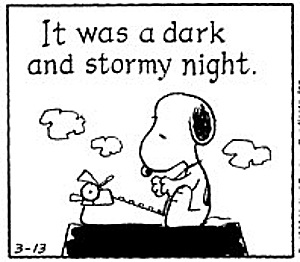
Review writing is still writing. You can still get stuck, it still requires discipline.
When it comes to writing the review, I have multiple considerations. First, the review has to fit the format of the magazine or blog I’m writing it for. Mostly, this is Starburst Magazine so it has to be a short (500 words or so) piece about something that is Sci-Fi, Fantasy or Horror themed. I can do in-depth analysis and the like, but really, anything over 1500 words is a feature, and should be approached differently.4
The audience are the reason why you are writing the review. You are not writing the review for the publisher or the author, the point of the piece is to function as a consumer guide to help others decide if they want to purchase it. You need to be clear, honest, precise and accurate. Readers rarely want spoilers, but they do want a rough idea of how complex the work is. This often means you have to talk in general terms, but it’s important not to get bogged down in the details. Plot summaries should be concise and explain esoteric concepts in broad terms. Even horribly complicated conceits can be dumbed down; the point of the summary isn’t to show the reader how clever you are in understanding big ideas, it’s to communicate those big ideas in order to help the reader. Your audience does not care about how smart you think you are, they want you to explain the work to them in clear terms.
If the thing I’m reviewing isn’t a book, I tend to talk about production values as well; the quality of the pieces for boardgames, the ease of use if it’s an audio piece, how easy it is to get to the venue, etc. I tend to avoid talking about how a book is put together; the formats for novels are pretty standard and are rarely remarkable. You also have to take care to not be too technical; this is entertainment, not a thesis.
Finally, we have the score. Like many reviewers, I don’t like giving out a score, I want you to read the article I worked hard on rather than just checking the number at the bottom. However, it is a useful tool, but readers should always remember it’s just another part of the overall critique, rather than the aim of the review. I tend to set my standards by similar works. For example, if it’s an urban fantasy novel, then to get a Ten out of Ten, it needs to be as good as Good Omens by Terry Pratchett and Neil Gaiman. It’s a book I’ve read many, many times and I love dearly. That’s my bar, and I set it pretty high, otherwise a ten is worthless.
I also have a short list of books deserving the score of one and again, these are rare. Most of my calibration is done by considering previous works that I consider to be average, and working from there. I tend to be slightly more generous to output from small businesses, but I don’t have any time for vanity work. For example, that means I tend to give small press books a second reading, but if it’s clearly just been thrown out there to appease the writer’s ego, then I will be merciless.
I also love debut novels, and am delighted when a new author is brilliant from the very start. Context is also important to the score; a consistently brilliant five-part series impresses me far more than a rather good one off, though books that just stop rather than end (because they’re part of a trilogy) will never get a ten; each work should stand on its own merits.
Once the review is published, you then need to contact the person who gave you the thing you examined, and tell them it’s online. This is common courtesy, and ensures a good working relationship. I tend to housekeep at the end of every month, which means some suppliers get a boatload of reviews in one go.
So that’s my method, as raw as it is. My approach seems to work and people seem to like the reviews, so I think it’s valid. I am very lucky to have a platform to inflict my opinions on the world and hope to do so for some time.
1: I love interviewing authors. I tend to ask a bunch of specific questions and then a hand full of fun ‘standard’ questions. You’ll be unsurprised to learn that authors prefer truth to beauty but it’s still a nice question to ask.
2: They are some writers who mix it up every other book or so, however. This tends to make it very refreshing and these authors tend to be very prolific.
3: The house has many, many books. We need more shelves.
4: By which I mean more research. I do like research, who doesn’t like learning things?
My 2012
It’s New Year’s Eve, so of course this is going to be a retrospective post looking back at the year and looking forward to the future. That’s what New Year’s Eve is for, after all.1.
2012 hasn’t been a bad year for me, all things told. My career, IT-wise, has been rubbish. Worked has dried up in the sectors I specialise in, and it’s also become much less satisfying. At the same time, copy-writing, editing and game design related work has turned up more frequently and it’s even looking like it might start to pay the bills. Still, it’s tight, but more satisfying. Early 2013 is going to be a real proving ground for me, and I’m actually excited by the challenge.
Creativity wise, things are getting better. My tabletop games column in Starburst Magazine is apparently quite popular (they tell me), and I had a lot of fun organising a 1950’s themed, Dan Dare inspired LARP, so much so that I’m running another game in late April. 2012 saw some of my very short fiction getting published, and fingers crossed, more of that should appear in 2013. Most importantly, I’ve simply gotten on with the important business of shoving words down and then flogging them to anyone who’s interested.
The intention for 2013 is to significantly turn up my creative output, and as such I’ve signed up for the Million Word Challenge. That’s a million words produced in a year, not counting general communications. Or to put it another way, 3500 words a day, allowing for days off. It’s not as daunting as it sounds, but it’s just scary enough to be motivating.

It didn’t happen like this at all, we had the cab to ourselves and it was a Deltic. Still, you get the idea.
The most significant thing that happened in 2012, however, was that I proposed to Anne L Davies, and that she said yes. For those who don’t know, I took Anne on a Rail Ale Steam Tour 2 for her birthday, with a ring in my pocket. The entire vintage train station was in on it (due to the pile of paper work required to allow one to smuggle a young lady into the privacy of the cab of a vintage Deltic). I had a whole line of patter worked out and everything, though I suspect my beloved knew exactly what I was up to. Strangely, she still seemed surprised when I dropped on one knee and asked the question. Best day of 2012, no contest.
So goodbye 2012; you’ve been terrible for my pocket and it’s certainly not been a smooth year, but in terms of the things that matter; love, good friends, family and knowing your place in the universe, you’ve been a pretty good year.
1: What NYE isn’t for is turning up to a series of parties for mandatory fun. I’ve been to a great many New Year’s Eve blow outs, and though a lot of them have been a great excuse to celebrate the year with friends, an equally significant number have been ruined by the fact that I simply wasn’t in the party mood, or that so many people partying at the same time made it all a logistical nightmare.
The one sort of NYE do I’ve never done is the formal dance and dinner; the whole dressing up and showing off thing in some sort of hall or theatre, and I suspect that might actually be the way to do it in future, rather than simply having an extended house party.
2: Anne is a huge steam train nerd; despite this, some friends were very surprised by this, even the ones who’ve been to the house and seen the huge collection of trains.
Ordos
They are a great many of projects that I’d love to do, but I am completely aware that I don’t have the time or resources to handle them with the level of care I feel they deserve. Many of these are LARP1 projects. Despite my huge love of games and a desire to tell wild stories, LARP is very hard to do well.
One of these dream projects is a thing that I call Ordos. Set in the Warhammer 40K universe, players would play members of the Inquisition. Each player would select an exquisitely detailed character from a set list, and it would be quite rules light. Inspired by NWO Games Ars Magica campaign2, this would bring together incredibly powerful characters and make them interact with each other.
There would be 3 games in total; Xenos, Malleus, Hereticus.3, and each would have very high costume standards and set pieces designed to evoke the universe.

The 40K universe simply begs to have many great props made for it.
Each event would be a High Conclave, and in the game world, the events would be spaced centuries apart. (In reality, you’d get an event every 18 months or so). The site would ideally be a repurposed industrial building, with plenty of places for conspirators to sneak off and talk in hushed tones. The Victoria Baths in Manchester would be ideal.
The idea would be to bring to live the complex and gothic world of Warhammer 40,000 without falling into the clichés that haunt LARP systems. Because the medium began as a way of simulating fantasy adventures, many LARP suffers from a focus on action, typically using rubber or foam weaponry.4 Though this has its place, the real appeal to larp is the same as any other media; it’s ability to bring you out of yourself and explore a fictional world, and this can be done without the need for waves and waves of monsters.
Such games are possible. As we speak, someone is organising a Battle Star Galactica game on an old battleship. It looks marvellous, but it’s unlikely I can afford it. I do hope it is the way that LARP will go in the future and time will tell. To echo the battle cry of many a games organiser, I want to play these sort of games, not run them.
1: LARP, aka Live Action Roleplay, often described as cross-country pantomime, it’s a deeply silly and extravagant hobby that combines the many of the logistical problems of theatre with the heartache and insanity common to novelists. Once you’ve ran the game, that’s it; it will be never repeated, you were either there or not. It’s a great experience that feels brilliant and looks very silly. It’s utterly ephemeral and there really is no other media quite like it.
2: New World Order Games were a merry band of larp organisers who created a series of remarkable and highly detailed game based on the Ars Magica roleplaying game. To give you a hint as to how much work went into briefing the players, you can take a look at 700-page book composed of the all the players briefs for the first game. Later games have two volumes rather than just the one, and an equal amount of love went into the props and costume. Unsurprisingly, several members of that creative team now produce other highly popular games.
3: These are three major factions of the Inquisition. For the uninitiated, Warhammer 40K’s version of the Inquisition is a fear inducing organisation who are utterly above the law. They root out demonic infestation, treachery and alien influence, and can use any means to do so, including blowing up worlds.
4: The game I’m currently writing, Greater Goods and Lesser Gods experiments with these ideas, but goodness will there be a lot of action. It’s a 1950’s Dan Dare style game, and it should be huge fun.
Dan Abnett Interview
No blog post update today; way too much to write up. Instead, take a look at this interview I did with Dan Abnett for Starburst magazine.
Superman Versus The Elite
Mainstream comics have a strange sort of an affliction; on the one hand the producers are constantly looking out for innovative new ideas and story lines in order to sell books to an increasingly jaded and cynical audience, who also fear change1. The result tends to be that any work that challenges the status quo does incredibly well to begin with, before being quickly buried. 2
I was remind of this after watching Superman versus The Elite, which is an odd sort of cartoon. It’s an adaptation of a comic book which in itself was a reaction to another comic book that had nothing to do (directly) with Superman. The plot of Superman versus The Elite can be summarised as something along the lines of this; “Superman encounters a new team of heroes who, lead by a Union Jack Flag wearing Englishman3, go out of their way to directly take on tyrannical regimes. Superman’s public approval is suffering due to his boy scout image, and he goes on to teach this team, known as The Elite that killing is wrong, and that violence is scary.” The behaviour of the characters make little sense, Superman comes across as a grumpy old bully and the plot fails on every level, even as a possible parody.

Jenny Sparks; the spirit of the last century, wrapped up in the Union Flag.
Or to put it another way, the cartoon is a boring bag of rubbish, and it’s based on an equally boring Superman story, What’s So Funny About Truth, Justice & the American Way?. That story was written as a response to The Authority, a comic book series created by Warren Ellis and Bryan Hitch. The initial run of book asked the question “If you literally had the power to overcome tyranny, then would you accept the moral responsibility to do so?” Thought provoking and deliberately provocative, it was crammed with some lovely ideas, such as the spirit of the age, the soul of cities, super heroes as a pantheon, and iconic heroes being part of a much older story.4
It didn’t last, of course. DC comics bought Wildstorm, who published The Authority. After an initially amazing run, with some great talent involved, it was quietly taken out round the back and shot.
The fact that Superman versus The Elite exists is just odd; it’s as if someone at DC felt so threatened byThe Authority that they wanted to ensure that it was stomped on thoroughly. What it actually did was remind me how good the original work was, and not only dig them all out again, but recommend the back-issues to friends. Maybe that was the plan, but I doubt it.
1: Perhaps because the audience is getting older. Recent research (article here) suggests that over a quarter of the readership is over 65.
2: The good but over-rated Watchmen is not the exception to this rule you may think it is. The work has been pretty much seen as a one-off, its innovations taking decades to filter into mainstream books. They recently launched spin-off books based on the original work, causing much outrage from the comic book reader community, who mostly failed to consider that had this happened sooner, it may have triggered all sorts of interesting ideas.
3: Oh, and they have a magician, a super strong guy, a winged girl with techno-organic powers and a reality hopping space ship that can generate teleportation portals. The Elite are a strawman parody of The Authority, such much so that it’s kind of sad.
4: Apollo and Midnighter where direct references to mainstream characters Superman and Batman. One was the Sun, the other night. Where one was kind, the other was vicious. They were also lovers, which made every homophobic comic book fan who read the book spit out their dummies so fast that the sound barrier was breached. Seriously, the day that book came back you could hear the sonic booms.
Black Library Weekender
Rather than the usual format for a blog post, in which I wax lyrical1 about some nerd thing or other that has caught my eye this week, I’m going talk about what I did this weekend. Which is go to a luxury hotel in Nottingham and hang out with book geeks.
The Black Library Weekender was a two-day event focusing on the books produced by the world’s fifth largest publisher of Science Fiction. I am a big fan of the Black Library, partially because I was bitten by the Warhammer bug at a very young age2, but also because it deals with expanding consistent world settings; everything BL produces is part of a growing mythology, and everyone is invited to dive in. The imagination, much like sports, can be more fun with the addition of some basic rules, and the loose guidelines that define the worlds of Warhammer tend to be a lot of fun.3
So what happens when hundreds of fans turn up at a really nice place with conference facilities, a bar and a spa? A good time is had by all it seems, though I didn’t see many other fans in the swimming pool (they were mostly in the bar). Personal highlights for me include getting to chat away with the likes of Clint Werner4, who is very epitome of a Texan Gentleman, getting to geek out slightly at Aaron Dembski-Bowden5, and talk to a host of authors, editors and fans. (I was stunned to learn that they are people still using the old-school Rogue Trader rules to play RPGs. That is deeply hardcore.)
I also got to interview Dan Abnett for Starburst Magazine. I’m a big fan of Dan’s work, and it was a lot of fun to do. He’s a nice chap and I got some great stuff to write up later. I probably came across like a huge fanboy, but then that is who I am.

I totally played it cool, as you can see.
As an event, it was mostly seminars and signings, and there was quite a bit of overlap with the Horus Heresy talks; I learned a lot about what was coming up over the next 18 months for that series, and much less about other lines. However, I was also able to grab multiple viewpoints and takes on that bestselling series, so nothing was wasted. Another highlight was some great insights into the adventure gamebook industry.
The evening social events included The Pitch Factor, a Pop Idol style event where nervous unpublished authors pitched their ideas to two editors and an English teacher6. I had a go myself, and got the reality TV experience7, but it was an awful lot of fun. There was also a quiz, which was essentially authors versus the fans. Technically the fans won, but judging by the amount the laughter, I think everyone did.
It was a large, but intimate feeling event. The Black Library ‘tribe’ is a rather awesome one, and I can’t wait to do something like this again soon.
1: Or if you’ve met me, babble in excitable Geordie whalesong.
2: There is no known cure for Geek. It may mutate, but it can never be cured, and that’s fine the way it is.
3: Black Library, and indeed Games Workshop, have a policy that can best described as “It’s all true, especially the lies”. Much of the work is told from a specific viewpoint, and no one pretends that any one faction has the full facts. This means that stories are stack upon stories, creating a deep yet flexible world. This is a very British approach to dealing with story settings that feature multiple creative talents. Doctor Who has a similar policy.
4: He writes some cracking stuff; if gritty fantasy featuring rat-men and disease sounds like your thing, check out Dead Winter.
5: Aaron is a great writer who should be more famous than he is. He also wrote a great article on canon here.
6: Legion of the Damned writer Rob Sanders. Possibly the coolest English teacher ever, for a given value of cool. I may have babbled incoherently at him at one point about his cinematic scenes in The Primarchs.
7: I should have gone for My Little Primarch, also known as We buy any Khan.
Planetary
Comics have been around for a very long time1, but the modern superhero story is a relatively recent invention2, and it’s only since the late eighties that this genre has begun a series of awkward self-examinations. Typically, when people talk about comic book stories that are about themselves, they start with The Watchmen3, but for my mind, a far more worthy and interesting take on what the hero myth means in modern times is Warren Ellis’s Planetary.
Rather than simply setting out to deconstruct comics, Ellis created a solid super-hero story about a small team of metahuman archaeologists who went out into the world looking for the strange and the fantastic. Their tag-line is ‘The world is a weird place, let’s keep it that way’ and the book is a celebration of the fact that the world is a diverse and interesting place. Not just one world though, all worlds. All possible worlds, and perhaps the impossible ones as well.
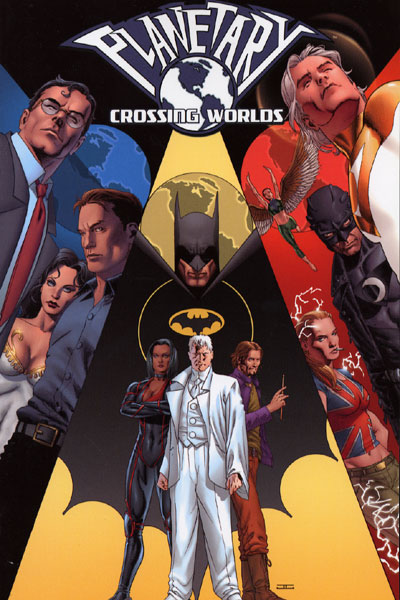
One of the graphic novels in the series focuses soley on cross-overs. The book’s premise is set-up to explore other worlds in a very specific way, and each story in the book cross-examines the cross-over. Also, they’re great stories.
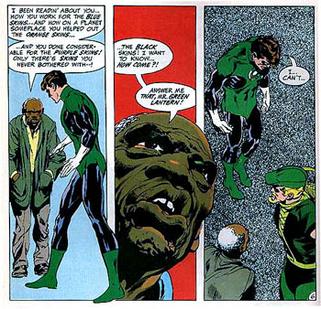
Of course, as this is a super-hero book, their world is even more interesting than ours, as it features dinosaur islands, atomic babies and darker origin myths. Planetary is set in a reality where the sort of super-science and techno wizardry found in the mainstream comics produced by the likes of Marvel and DC has been deliberately kept secret from the world. This itself was a commentary on limitations of mainstream comics at the time; your average Green Lantern or Iron Man story contains things that should permanently change the lives of many people, and yet never seem to do so.4
It is because of this book that this is less true now, and indeed, the new crop of Marvel Movies do seem to constantly acknowledge that the world is being changed by the presence of superhuman beings. 5. Planetary also examined and discussed how fragile many of the origin stories of super heroes are; for example, the likes of Superman and Wonder Woman both begin their tales with the kindness of strangers. For their stories to work, you have to assume that people are still kind and decent enough to take in lost strangers, and this should set the bar for the nature of the world that the heroes inhabit.
Unlike The Watchmen or even Kingdom Come, the thing that will make Planetary stand the test of time is that it is a story about how the world shapes stories, and how stories shape the world. It’s a lesson in how to make myths, and deserves a place in the list of classic super hero stories.
1: Depending on how you define comics of course, but telling stories with pictures is as old as language.
2: Tales of human beings with remarkable abilities are, of course, ancient. But we only started dressing them in spandex since the 1930’s.
3: Alan Moore’s The Watchmen is seen as a classic simply for its mature approach to superheroes, focusing on the consequences of their actions in a way more in tune with real world events. It is, however, an awkward teenager of a book, a lot of the key themes fumble at points and there seems to be little love for the actual genre. It’s groundbreaking, which also means that as the genre moves on, it becomes more and more dated.
4: It would be dishonest to pretend that mainstream comics didn’t begin this journey on their own. This bit of social commentary predates Watchmen by over a decade (it’s from Green Lantern #76). What Planetary did was turn this commentary in on itself, and encourage writers and producers to make the notion of ‘how does an alien invasion effect the stock exchange’ something that’s worth talking about.
5: Ellis would go on to write for the Iron Man comic book, and ideas from those books are directly referenced in the movie. Another example of Marvel is keeping a track of how the heroes change the world around them can be found in the excellent Marvel Movie One-Shot Item 47.
Justice League Dark
Just over a year ago, DC Comics1 rebooted and relaunched their long list of comic book titles so they all began at Number 1 again. In addition to confusing bric-a-brac bargain hunters all over the world as they picked up a copy of the Superman number 1, DC also launched a range of new comic books, including Justice League Dark, which as silly names go, is up there with Green Lantern.
DC have a bunch of ‘supernatural’ heroes whom they’ve struggled to write about in the past. However, they announced that, during the reboot, they’d be moving some of the more obviously occult characters from their more grown-up range of comics back into their mainstream line, and this is why Justice League Dark features one of my favourite protagonists; the Liverpool-born, London-living, dirty-blonde bastard John Constantine2.
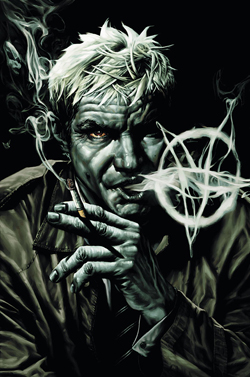
According to his creator, Alan Moore, Constatine’s look was inspired the musician Sting.
Unlike the usual sort of comic book hero, John isn’t a fireball flinging wizard; he’s cast more in the mould of a gritty occultist from an urban fantasy novel. Deceit and information are his weapons first and foremost, and his adventures tend to be very character focused dramas where the supernatural serves as a metaphor for more everyday horrors. So an odd choice for a leader of a what is essentially a version of The Avengers who fight vampires not aliens.
The weird thing is, it sort of works. Don’t get me wrong, the tales are rather silly and there’s nothing in Justice League Dark that hasn’t been done countless times in mainstream comic books. But there’s a charm to seeing a trench coat wearing cynic light up a cigarette whilst the world faces annihilation from this Vampire King or that ancient evil from beyond the stars. This is, perhaps, because we can believe wisecracking bravado from a bitter looking middle-aged man who’s still standing, despite clearly having been through hell.
It helps that the rest of the League are more brightly coloured; we get, for example Zatanna3, a top-hat wearing Las Vegas stage magician who can do almost anything with magic simply by focusing her will and saying what she wants doing backwards.
This has made her tricky to write for in the past, but because she’s in a book that focuses mostly on supernatural menaces, the writers get to limit her by making any threat worth her while resistant to her power. So she can deal with henchmen with a simple “skoom paz” spell, but can’t cut to the chase with a “dab gib tuo ekat” spell. This version of Zatanna is less light and more angry than previous incarnations, but balances out the team nicely.
We also get Deadman, a wise-cracking ghost in a silly costume, who’s been around for ages and is actually quite dull; character growth is limited if you’re a ghost, I suppose. The rest of the team changes, but these three seem to be our core team and they generate enough conflict and bickering between them to keep the book going.
I suspect the problem will be, that in the long run, Justice League Dark can only do a sanitised version of occult horror. These characters had been relegated to the more mature books for a reason, and actually making something scary without going for clichés like ancient evils and hordes of vampire requires tightly scripted, ongoing drama. They are hints that the book is attempting to go in this direction, but time has yet to tell if it can deliver the sort of chills needed to make this book stand out. I hope it does, but I suspect it will eventually yet another footnote in DC’s long list of abandoned ideas.
1: DC gave us Superman, Batman, Wonder Woman and The Flash, and happen to be owned by Time Warner. DC’s premier superhero team is The Justice League, who have yet to have a good movie. Not to be confused with Marvel, who own Captain America, Iron Man, Thor and Spider Man, who are owned by Disney these days. Marvel also gave us the The Avengers, and currently top dog, hero books wise.
2: John originally appeared in a 1985 issue of Swamp Thing, as part of a ‘mature minds’ range of comic books which eventually became known as the Vertigo line. The character eventually got his own book, Hellblazer and had some great writers during its long run, such as Warren Ellis and Mike Carey, and is currently in the hands of the under-rated Peter Milligan, all of which needs its own post. Hellblazer also inspired the movie Constantine, which also needs its own post and about half a bottle of whisky to write.
3: Zatanna, alas, doesn’t have her own book, as it keeps getting cancelled, and has been ‘reimagined’ many times. For my money, the best take on her so far has been Paul Dini’s run, who wrote her as stage magician first and a hero second. Though you could argue that Dini is at an unfair advantage as he’s married to professional illusionist, Misty Lee, who also looks good in a top-hat.
 Ed Fortune